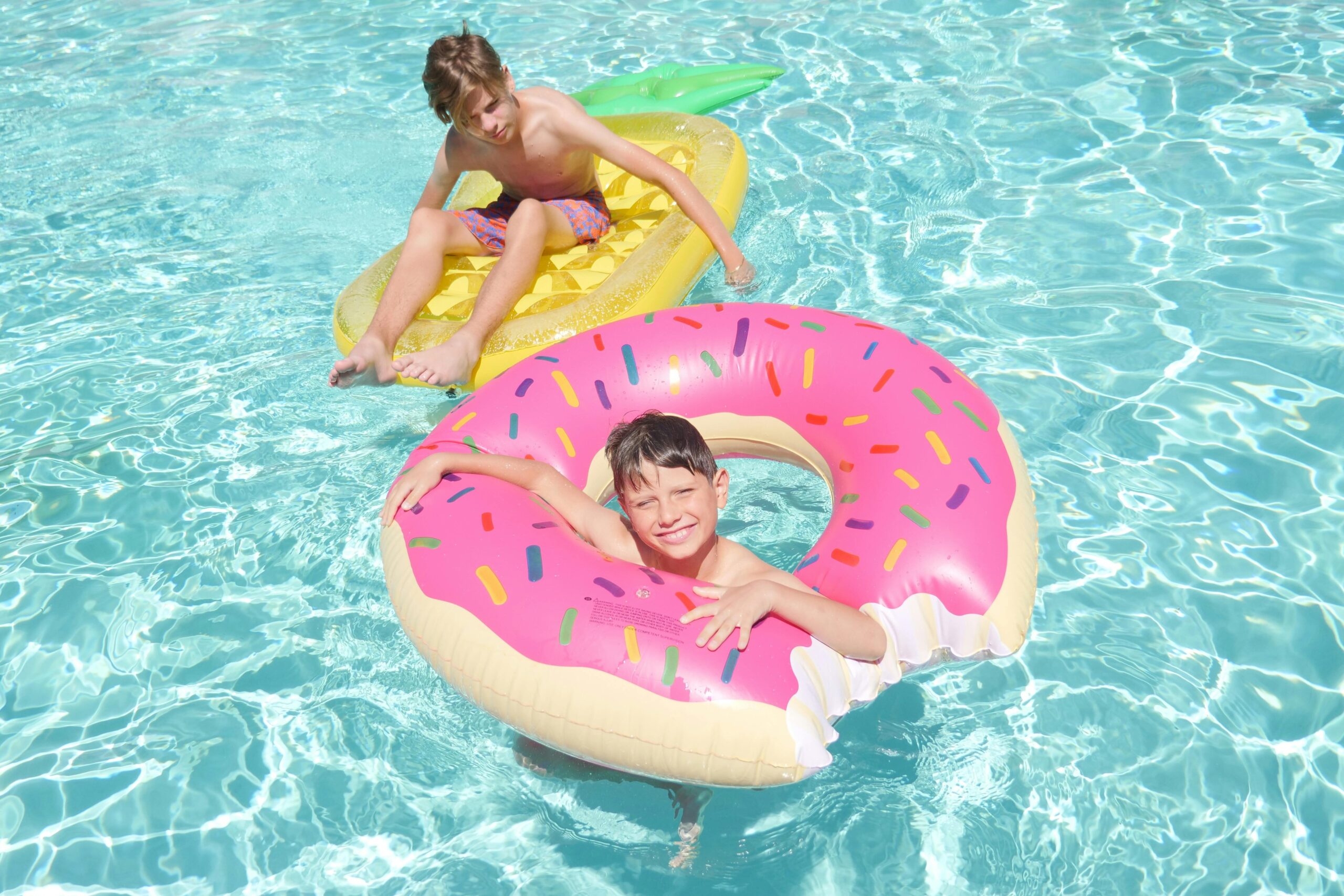
A swimming pool is one of the biggest backyard investments most families ever make, and a good one should last 25 years or more. The trouble is, your family won't look the same in 25 years. The toddler splashing in the shallows today is the teenager doing bombs off the side in five years, the young adult bringing flatmates round for summer barbecues a decade later, and eventually the parent watching the next generation jump in for the first time.
Family-friendly pool design is really about future-proofing. The best pool areas adapt to every stage of family life, not just the one you're in right now. Here's how to plan a backyard pool for families that still feels like the right choice in 10, 15, and 20 years.
A future-proof pool design accommodates different ages, swimming abilities, and uses without needing major modifications. The key elements are a thoughtful combination of depth zones, safe and easy entry points, a shape that supports both play and exercise, surrounds that work for supervision and entertaining, and low-maintenance materials that hold up to heavy use. Get those right at the design stage and your pool stays useful from the toddler years right through to grandchildren visiting on summer holidays.
Depth is the single most important decision you'll make for long-term usability. A pool that's too shallow is fine for small kids but dull for teenagers. A pool that's too deep makes parents nervous and excludes younger swimmers from large parts of the water. The sweet spot is a pool with a graduated depth profile, often called a sport pool or family pool layout.
A typical family-friendly depth runs from around 1.1 metres at the shallow end to 1.8 or 2.0 metres at the deeper end. That gives you:
Resist the temptation to design only for the kids you have right now. A 1.0 metre uniform-depth pool feels generous when you have a five-year-old. It feels cramped and shallow when that same child is 14, learning to swim freestyle, and wanting to invite friends over. The Leisure Pools sport-style models we install across Wellington and Wairarapa are specifically shaped to handle multiple uses at once.
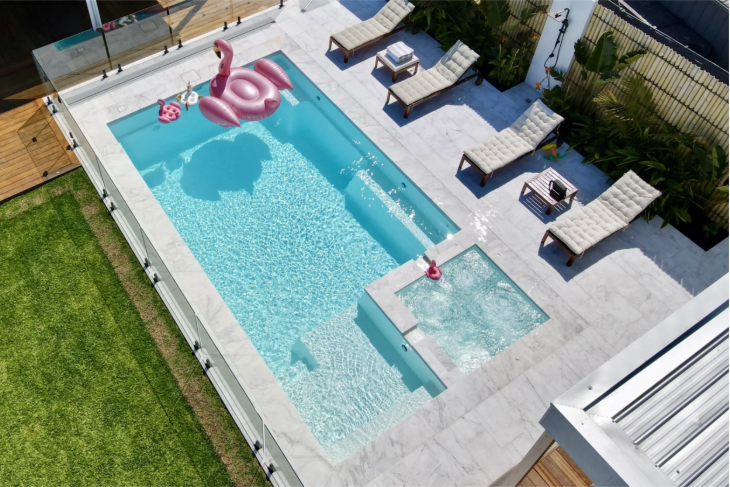
Pool shape affects what your family can actually do in the water. The right shape lets one person swim laps while another plays games, while a third lounges on a step.
Rectangular pools are the workhorses of family-friendly pool design. They make the best use of available space, support lap swimming, and create clear zones for play and rest. The Leisure Pools Reflection and Elegance ranges are good examples.
Plunge pools are compact, often designed for smaller sections, and work well in courtyard settings. They suit families who entertain more than they exercise and have limited backyard space, which is common in inner-Wellington properties.
If you're not sure which suits your family, think about how you'll use the pool five and ten years from now, not just this summer. A growing family typically gets more value from a rectangular or modified-rectangular shape with built-in seating ledges.
Getting in and out of the pool is where small kids, older parents, and tired teenagers all meet. A well-designed entry zone matters as much as the pool itself.
The features worth specifying at the design stage:
A beach entry is one of the best long-term investments you can make. It works as a paddling area for under-fives, a seating zone for adults, a place to set up a sun lounger half-in the water, and eventually a safe access point for ageing parents who want to stay involved without struggling on steep steps.
Different ages want different things from a pool. The clever part of family-friendly pool design is choosing features that serve multiple stages.
For the under-fives: A shallow tanning ledge, a fenced area, soft surrounds, and warm water (a heating system pays off here). At this stage you want supervision to be easy and the space to feel safe.
For school-aged kids: Room to play games, learn to swim properly, and invite friends over. Pool toys, basketball hoops, and floating mats become daily features. You want enough open water for activity and clear sightlines for the parent on duty.
For teenagers: Deeper water for jumping, room for groups, and somewhere to socialise without parents looming. Built-in lounging ledges and a separate seating zone outside the pool help here. LED pool lighting suddenly matters for evening swims.
For young adults and visiting friends: A pool that doubles as an entertaining feature. Decking, shade, and outdoor furniture become as important as the pool itself.
For empty-nesters and grandparents: Easy access, lower-maintenance equipment, and water-based exercise. Stairs, handrails, and warm water start to matter more again, often coming full circle.
The same pool can serve all these stages if you plan for it. The feature you skip now to save a few thousand dollars is often the one you wish you'd installed when your kids hit 12.
The pool itself is only part of the family-friendly design. The space around the pool determines whether it actually gets used.
Decking and paving need to be slip-resistant when wet, comfortable underfoot, and durable enough for years of bare feet, wet towels, and outdoor furniture. Composite decking and exposed-aggregate concrete both perform well in New Zealand conditions.
Shade matters more than people realise. A pool baking in full Wellington sun all day might sound great in theory, but in practice you'll want a covered area where the kids can take a break, where snacks can be served, and where adults can supervise without burning. Pergolas, sail shades, and planted trees all work. Just plan their position relative to the pool early.
Lawn space near the pool gives you somewhere to set up a paddling pool for a tiny one, throw a frisbee for the dog, or pitch a tent for a sleepover. Don't pave the entire backyard.
Storage is the unsung hero. A small lockable shed near the pool for floats, robotic cleaners, chemicals, and pool toys keeps the space tidy and stops you tripping over inflatables for the next decade.
A family pool is rarely just a family pool. Birthday parties, summer barbecues, Christmas gatherings, and Friday afternoon catch-ups all end up centred on the water once you have one.
Adaptable pool ideas for entertaining include:
Designing the entertaining zone alongside the pool, rather than retrofitting it later, saves money and produces a much better-integrated result.
Family life is busy. The years when you most want a pool are also the years when you have the least time to look after one. Low-maintenance design choices pay dividends for decades.
The goal is a pool that takes 10 to 15 minutes a week of attention during peak season. That's achievable with a well-designed fibreglass pool and modern equipment.
In New Zealand, pool fencing is a legal requirement under the Building Act 2004 (which absorbed the original Fencing of Swimming Pools Act 1987). Any pool capable of holding water more than 400 mm deep must have compliant safety fencing, with self-closing and self-latching gates, and the area must be inspected at least every three years by your local council.
For a family-friendly pool, fencing is also a peace-of-mind feature. Practical considerations:
The fence is the first and last line of defence. Every other safety feature builds on top of it.
Before you sign off on a design, run through this list:
Tick most of these off and your pool will still feel like the right pool when your kids are bringing their own families round for Christmas.
What's the ideal pool depth for a family with young children? A graduated depth from about 1.1 m to 1.8 m gives the best long-term flexibility. The shallower end is safe for younger swimmers, while the deeper end supports older kids learning to swim properly, jumping in, and playing games. Avoid uniform-depth pools shallower than 1.1 m if you want long-term value.
How big should a family pool be? For a family of four, a pool around 7 m to 9 m long and 3.5 m to 4.5 m wide is the typical sweet spot. It's big enough to swim, play, and entertain, while still fitting most Wellington-area sections. Smaller plunge pools work for tighter sites if compact entertaining is the priority.
Is fibreglass the best option for a family pool? Fibreglass is generally the best fit for families because of its lower maintenance, smoother surface (gentle on skin and feet), durability, and faster installation. The non-porous gel coat resists algae and means less time on upkeep, which matters when you're already juggling kids, work, and weekends.
How can I future-proof my pool design? Choose a graduated depth, a versatile rectangular or modified-rectangular shape, wide entry steps with a tanning ledge, internal seating, low-maintenance fibreglass construction, and a generous surround with shade and lawn nearby. Specify heating, lighting, and a cover at the design stage rather than as add-ons later.
Are saltwater pools better for kids? Many families prefer saltwater chlorination because the water feels softer and is gentler on skin, eyes, and swimwear. The salt level is far below seawater concentration. It's a popular choice for families with young children or anyone with sensitive skin.
How long does a fibreglass family pool last? A quality fibreglass pool with a Leisure Pools shell is designed to last a lifetime with proper care. The structural warranty on the shell is lifetime, and the gel-coat surface is rated for decades of use. That's why future-proofing the design matters: your pool will outlast plenty of life stages.
A family-friendly pool isn't about fitting today's family into a pool. It's about creating an outdoor space that grows alongside your family for the next two or three decades. The right size, shape, depth profile, entry points, and surrounds, combined with a low-maintenance fibreglass build, give you a pool that works just as well for paddling toddlers as it does for teenagers, adult children, and visiting grandkids.
Wellington and Wairarapa families have specific design considerations too. Section size, shelter from the wind, and the need for heating to extend the season all factor into a pool that genuinely gets used most months of the year.
Take a look at our range of fibreglass swimming pools in Wellington to see the shapes, sizes, and depth profiles available. From compact plunge pools through to full family-sized models, the Leisure Pools range we stock has been built with adaptable, long-term use in mind.
When you're ready to talk through your section, your family, and your vision, request a quote and Brent or one of the team will walk you through it. We've designed pools for sale in Wellington families across every life stage, and we'd love to help you plan one that's still the right pool when your kids are grown.