Most homeowners start the pool conversation the same way. They search, they get quotes, and somewhere between the first call and the third brochure, someone asks: fibreglass or concrete?
It's the central question of any NZ pool project, and it's worth answering clearly. Fibreglass swimming pools have become the preferred choice for New Zealand homeowners - not because of clever marketing, but because of what happens over years of ownership. Lower running costs. Less time spent on maintenance. A pool that still looks great a decade in, without a costly resurface.
This guide walks through the comparison honestly, so you can make the right call for your home and your budget.
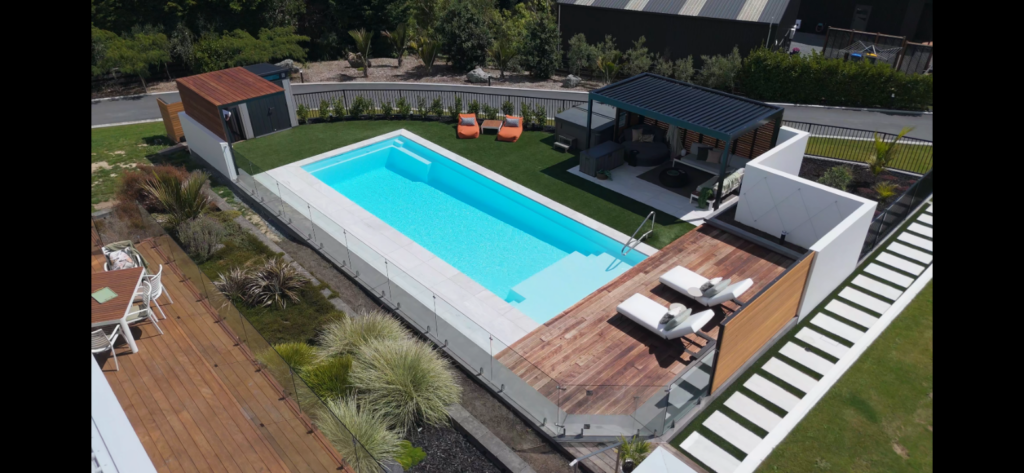
A fibreglass pool is a factory-manufactured shell, moulded from fibreglass-reinforced plastic and finished with a gelcoat interior. The shell is made in a single piece, delivered to site, and installed into a prepared excavation, typically within one week. The gelcoat surface is non-porous, smooth, and colour-integral, meaning the colour runs through the coating rather than sitting on top.
Inground fibreglass pools come in a wide range of shapes, sizes, and depths, from compact plunge pools to full family-size models with ledge seating and shallow entry areas.
This is the comparison most New Zealand homeowners need, so here it is side by side.
| Fibreglass | Concrete | |
| Installation time | 1 week | 3–6 months |
| Surface | Smooth, non-porous gelcoat | Rough, porous plaster or aggregate |
| Chemical use | Lower (algae struggles to take hold) | Higher (porous surface harbours algae) |
| Annual maintenance cost | Lower | Higher |
| Resurfacing | Not required in normal lifespan | Every 10–15 years ($15,000–$30,000+) |
| Flexibility (ground movement) | Flexes without cracking | Can crack with soil movement |
| Custom shape options | Manufacturer range | Fully custom |
| Lifespan | 25+ years | 25+ years (with maintenance) |
| UV performance | Gelcoat colour holds well | Surface degrades and fades |
Concrete pools offer one genuine advantage: complete customisation. If you need an unusual shape or a very large pool that doesn't fit any standard mould, concrete gives you that freedom. For most New Zealand homeowners, though, the available fibreglass range covers every practical need and the ongoing savings are significant.
One of the most underestimated differences between fibreglass and concrete pools is time.
A fibreglass shell is manufactured to specification in a controlled factory environment. When it arrives on site, the excavation is prepared, the shell is craned in, connections are made, and the pool is filled. Most installations are complete in one to three weeks.
Concrete is built on-site. The process involves excavation, steel reinforcing, spraying or pouring concrete, curing time, plastering, and finishing. From start to swim, you're typically looking at three to six months.
That time difference matters practically. It means less disruption to your backyard, fewer weeks of access restrictions, and a faster path to actually using what you've paid for. For families who start planning in autumn with summer in mind, it can mean the difference between swimming and waiting another year.
The non-porous surface of a fibreglass pool is the key to lower running costs. Algae needs something to grip onto. On a smooth gelcoat interior, it struggles. On a porous concrete surface, it finds plenty of places to grow.
The result is a meaningful difference in what you spend on chemicals each year. Fibreglass pool owners typically use 70% less chlorine than concrete pool owners. Over a ten-year period, that adds up to thousands of dollars.
The bigger saving comes from what fibreglass doesn't need. Concrete pools require resurfacing every ten to fifteen years. In New Zealand, that work typically costs between $15,000 and $30,000 depending on the pool size and the finish chosen. It's a significant cost that fibreglass owners don't face.
Low maintenance pools in New Zealand also need to account for UV exposure. New Zealand has some of the highest UV levels in the world, and that affects pool surfaces. Concrete plaster and aggregate finishes fade and degrade under sustained UV. Fibreglass gelcoat holds its colour better over time because the colour is part of the coating itself, not a layer applied on top.
Durable swimming pools for New Zealand need to handle more than UV. Ground movement is a real consideration, particularly in Wellington and other areas of seismic activity.
Concrete is a rigid material. When soil shifts, a concrete pool can crack. Fibreglass is flexible by nature. The material can accommodate minor ground movement without structural damage, which makes it a particularly good fit for Wellington sections where the ground has some give.
The fibreglass shell also doesn't corrode. There are no steel reinforcing elements close to the pool surface, so you don't get the rust staining that can affect concrete pools over time.
When it comes to durability, fibreglass doesn't ask much. A regular water balance, occasional brushing, and an annual check of your filtration system covers most of what the pool needs. There's no plastering to inspect, no surface to reseal, and no concern about the interior breaking down as the years go by.
The range of inground fibreglass pools available in New Zealand has expanded considerably in recent years. The idea that you're limited to a basic rectangle is well out of date.
NZ Pools stocks the Leisure Pools Australia range, which includes models from compact entry-level designs through to large family pools with multiple features. Current models span eleven styles, including the Reflection, Elegance, Absolute, Acclaim, Harmony, Esprit, Olympus, Capri, Fiji Plunge, and the Reflection variants with Auto Cover or Splash Deck. All models are available across a wide range of sizes and in eight interior colours: Sapphire Blue, Crystal Blue, Diamond Sand, Aquamarine, Shimmer White, Graphite Grey, Silver Grey, and Ebony Blue.
Key features available across the range include:
Every pool in the range is manufactured to Australian and New Zealand standards. NZ Pools handles the full process from initial consultation through to installation and aftercare, so you're not managing multiple contractors across a six-month build.
The upfront cost of a fibreglass pool is generally comparable to a concrete pool of similar size. Where fibreglass pulls ahead is in total cost of ownership.
Add up the chemical savings over ten years. Add the cost of a concrete resurface you'll never need. Factor in the time cost of higher maintenance. The picture becomes clear: fibreglass is the more cost-effective choice for most New Zealand homeowners over any reasonable timeframe.
This is why fibreglass swimming pools in New Zealand have grown in popularity even as the overall pool market has become more competitive. Homeowners who've done the maths choose fibreglass not because it's cheaper to buy, but because it's cheaper to own.
If you're serious about understanding the numbers for your specific situation, a conversation with the NZ Pools team is the fastest way to get there. They can walk you through what your ongoing running costs are likely to look like based on pool size, your location, and how often you plan to use it.
Request a free quote from NZ Pools
Wellington has particular reasons to favour fibreglass.
The city's weather is more variable than Auckland or Nelson, but Wellington summers are genuinely warm, and a heated fibreglass pool extends the usable season from October through to April. The shorter installation window matters when weather windows are narrower.
Wellington sections often sit on ground with some movement. The flexibility of fibreglass is an asset here, where rigid concrete would carry more risk.
And Wellington's strong UV exposure during summer months makes the UV-resistance of fibreglass gelcoat a practical benefit, not just a marketing point.
NZ Pools is the only SPASA Gold Award-winning pool installer in Wellington (Fibreglass Pool up to $80,000, 2024). The team has been installing pools across Wellington and Wairarapa for years, and their knowledge of local sections, local councils, and local conditions is part of what makes the process straightforward.
Are fibreglass pools better than concrete pools? For most New Zealand homeowners, yes. Fibreglass pools install faster, cost less to maintain, don't require resurfacing, and are more resistant to cracking from ground movement. Concrete pools offer more shape flexibility, but the practical advantages of fibreglass outweigh this for the majority of residential installations.
How long do fibreglass pools last in New Zealand? A well-maintained fibreglass pool can last 25 years or more. The gelcoat surface is durable and UV-resistant, and the shell itself is not subject to corrosion. The key is maintaining good water chemistry, which protects both the shell and the pool equipment.
What is the maintenance cost of a fibreglass pool in NZ? Fibreglass pools use significantly fewer chemicals than concrete pools, typically around 70% less chlorine. Combined with no resurfacing requirements, annual maintenance costs are considerably lower. Exact costs depend on pool size, usage, and your chosen maintenance approach (self-managed vs professional servicing).
How long does it take to install a fibreglass pool? Most fibreglass pool installations take one to three weeks from excavation to fill. This compares favourably to concrete pools, which typically take three to six months to build on-site.
Can fibreglass pools crack? Fibreglass is a flexible material that can accommodate minor ground movement without cracking. This makes it particularly suited to areas with some seismic activity, such as Wellington. Concrete pools, being rigid, carry a higher risk of cracking when soil shifts.
What colours are available for fibreglass pools in NZ? The Leisure Pools range available through NZ Pools comes in four interior colours: Graphite Grey, Shimmer White, Sapphire Blue, and Ebony Blue. The colour is part of the gelcoat itself, so it holds well over time without fading.
If you're weighing up your options, the best next step is a conversation with someone who knows Wellington sections, local councils, and the full range of available pools.
The NZ Pools team offers free consultations with no obligation. They'll help you understand what pool would suit your section, what the installation process involves, and what your ongoing running costs are likely to look like.
Browse the pool range at nzpools.co.nz and get in touch to request your free quote.
If you've started researching swimming pools for your home, you've probably noticed there's no shortage of pool builders in Wellington. Quotes vary. Claims vary. And it can be genuinely hard to know who to trust with a project this significant.
So rather than tell you we're the best option and leave it at that, we want to walk you through exactly what makes NZ Pools different. Not in a vague, everyone-says-this way. In a specific, here's-the-evidence way.
The SPASA Awards (Swimming Pool & Spa Association of Australasia) are the industry's most recognised benchmark for quality. Judges assess completed pool projects on design, installation quality, site complexity, finish, and craftsmanship.
In 2024, NZ Pools won the SPASA Gold Award in the Fibreglass Pool up to $80,000 category. We also received Highly Commended recognition across three additional categories:
These aren't marketing claims. They're independent industry judgements made by qualified assessors who've seen thousands of pools across New Zealand and Australia.
When you're choosing between pool installers in Wellington, awards like these matter. They tell you that a third party has assessed the work and found it exceptional.
Some pool companies operate as franchises. You sign a contract with a Wellington rep, but installation crews, product decisions, and processes are all managed from somewhere else. When something goes wrong, accountability can be hard to pin down.
NZ Pools is different. Brent and the team are based here in Wellington and Wairarapa. They know the local terrain, the council requirements, the soil conditions, and the weather patterns that affect pool construction in this region. That local knowledge matters more than most people realise when it comes to installation timelines, site preparation, and getting the result right.
You're not dealing with a call centre. You're dealing with the people who will actually build your pool.
The single biggest fear most homeowners have when taking on a project like this is the unexpected. Unexpected costs. Unexpected delays. Unexpected complications mid-dig.
It's the thing we hear about most from customers who came to us after bad experiences with other contractors. And it's why we've built our entire process around removing that fear.
From your first consultation, we walk you through every stage of the installation. What happens on day one. What happens on day five. What could cause a delay, and how we handle it if it does. What's included, what isn't, and what everything costs.
Our customers describe this as "no unexpected surprises" and "explained the installation process well upfront." That's not luck. That's how we operate.
Not all fibreglass pools are the same. The quality of the shell, the gelcoat, the structural integrity, and the finish vary enormously between manufacturers.
NZ Pools stocks the Leisure Pools Australia range, one of the most respected fibreglass pool ranges in the Southern Hemisphere. Leisure Pools are engineered with Composite Armour Technology, offering superior UV resistance, non-porous surfaces, and long-term structural strength.
Our current range includes four models across a variety of sizes and colours:
Available in Sapphire Blue, Crystal Blue, Diamond Sand, Aquamarine, Shimmer White, Graphite Grey, Silver Grey, Ebony Blue.
Some builders in Wellington offer pool construction as one of many services. It sits alongside landscaping, decking, and renovation work. For them, a pool is a project type. For us, it's everything.
Being a dedicated pool specialist in Wellington means our knowledge, relationships, and processes are entirely focused on delivering great fibreglass pool installations. We know the products deeply. We know the installation process deeply. And when something unusual comes up during construction, we've almost certainly dealt with it before.
That depth of experience is hard to replicate.
Many pool companies disappear once the final payment clears. Installation done, job finished, best of luck with the chemistry.
NZ Pools takes a different view. Our relationship with customers continues long after the pool is full of water and the family is swimming in it.
We provide hands-on guidance on water care, maintenance routines, and how to get the most from your pool year-round. Our customers regularly mention this in reviews. One noted that Brent and the team provided "ongoing advice and service long after the project was completed." Another described the team's "tireless commitment to keeping promises."
That kind of ongoing support isn't something you can put a price on. But it's part of why our customers consistently recommend us to friends and family across Wellington and Wairarapa.
Awards and credentials matter. But so does what real homeowners say after the project is done.
Here's how Wellington families describe their experience with NZ Pools:
These aren't cherry-picked. They reflect the feedback we consistently receive on Google. We'd encourage anyone researching pool construction in Wellington to read through those reviews in full.
| NZ Pools | Generic pool builder | |
| SPASA Gold Award winner | Yes | Rarely |
| Wellington-based local team | Yes | Often franchise-operated |
| Dedicated pool specialists | Yes | Often multi-trade |
| Leisure Pools Australia range | Yes | No |
| Transparent, no-surprises process | Yes | Not always |
| Ongoing aftercare and support | Yes | Limited |
Choosing the right pool builder is one of the most important decisions in the whole project. The pool itself will be in your backyard for 20 to 30 years. The experience of getting there should be stress-free.
If you're at the early stages of exploring your options, the best place to start is browsing our pool range at nzpools.co.nz. You'll get a clear sense of the models, sizes, and colours available, along with more detail on our process.
When you're ready to talk, we're happy to come out and assess your section, answer your questions, and give you a clear, honest quote. No pressure. No surprises.
What makes NZ Pools different from other pool builders in Wellington? NZ Pools is the only fibreglass pool installer in Wellington to have won a SPASA Gold Award (2024). We're a local team, not a franchise, and we're dedicated pool specialists rather than generalists. Our process is built around transparency and we provide ongoing aftercare long after installation is complete.
What types of fibreglass pools does NZ Pools install? We stock the Leisure Pools Australia range, which includes a number of different models. To view our full range click here.
Does NZ Pools service Wellington and Wairarapa? Yes. NZ Pools operates across the Wellington region and Wairarapa. As a locally based team, we have specific knowledge of local site conditions, council requirements, and construction considerations in this area.
How long does fibreglass pool installation take in Wellington? Installation timelines vary depending on site conditions, council consent requirements, and the time of year. We walk every customer through realistic timelines during the consultation process so you know exactly what to expect.
What awards has NZ Pools won? NZ Pools won the SPASA Gold Award in 2024 for Fibreglass Pool up to $80,000. We also received Highly Commended in three additional categories: Fibreglass Pool & Spa Combo, Courtyard/Small Pool up to $80,000, and Fibreglass Pool up to $120,000.
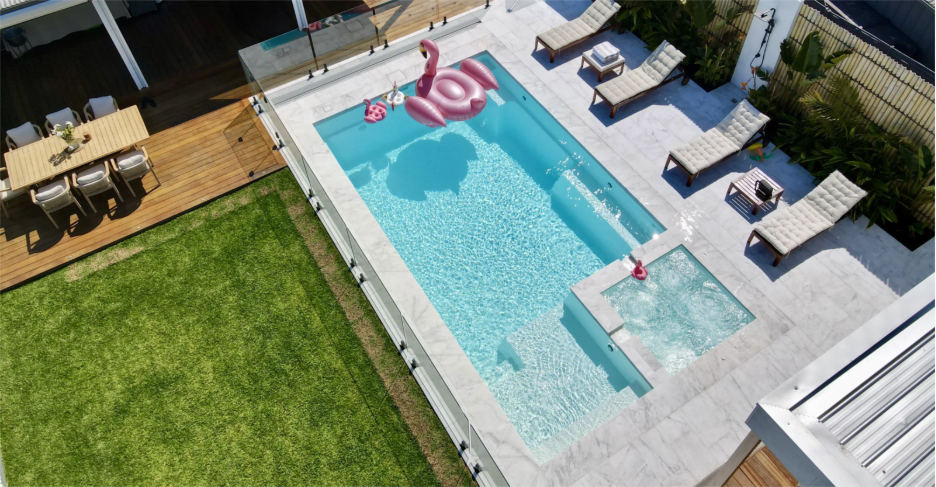
So you've decided you want a pool. The kids are begging for it, summer is coming, and the backyard is sitting there doing nothing. But before you commit to anything, you want to understand exactly what the installation process looks like: what happens, how long it takes, and who needs to be involved.
Good thinking. A fibreglass pool is a significant investment, and the more you understand the process upfront, the smoother the experience will be.
This guide walks you through every stage of fibreglass pool installation in New Zealand, from your first conversation with an installer through to your first swim.
Before we get into the installation steps, it helps to understand why fibreglass has become the go-to option for New Zealand homeowners.
Compared to concrete, fibreglass pools install faster, cost less over time, and require far less maintenance. The smooth gelcoat surface resists algae growth, meaning fewer chemicals and less scrubbing. Compared to above-ground pools, they look better, last longer, and add genuine value to your property.
For families in Wellington and Wairarapa especially, where outdoor living season can be shorter, a low-maintenance pool that's quick to get up and running just makes sense.
The Full Fibreglass Pool Installation Process
Every pool project starts with a conversation. A reputable installer will visit your property to assess:
This is also when you'll discuss pool models, sizes, and colours. At NZ Pools, we stock the Leisure Pools Australia range, which includes models like the Reflection, Elegance, Absolute, and Acclaim in sizes and colours suited to New Zealand backyards.
The consultation is your chance to ask every question you have, there are no dumb questions.
Once the site assessment is done, your installer will put together a detailed quote covering the pool supply, excavation, installation, plumbing, electrical, and any additional work like fencing, decking, or landscaping.
In New Zealand, inground swimming pools typically require a building consent from your local council. Your pool installer should guide you through this process, or handle it on your behalf. In Wellington and Wairarapa, this means working with Wellington City Council, Porirua City Council, Upper Hutt City Council, Lower Hutt City Council, or Masterton District Council depending on your location.
Timeframes for consent approval vary, but your installer should build this into the project timeline from the start. Rushing consent is a red flag.
What to look for: A good installer won't start digging until consent is approved. Anyone who suggests you can deal with consent "later" is not someone you want managing your project.
Once consent is granted and a start date is confirmed, excavation begins. This is when the project becomes real.
A digger is brought in to excavate the pool shell cavity to the correct depth and shape. The hole is dug slightly larger than the pool shell to allow for backfill and to make positioning easier.
Excavation typically takes one to two days for a standard residential pool, depending on soil conditions and site access. Rocky ground, clay soils, or tight access points can extend this phase.
The excavated soil is removed from site. Your yard will look like a construction site at this stage, which is completely normal.
The fibreglass shell is manufactured off-site and delivered to your property on a truck. Depending on your section's access, it will either be lifted into position using a crane or manoeuvred into place via the delivery vehicle.
This is one of the most dramatic moments of the project. Watching a large pool shell being lowered into the ground is something homeowners remember. It also tends to attract interested neighbours.
The shell is positioned carefully in the excavated cavity and levelled to ensure even water distribution once filled.
With the shell in the ground, we connect the pipework for the filtration system, including the skimmer box, main drain, return jets, and any additional features like water features, lights, or heating connections.
As plumbing progresses, the cavity around the shell is backfilled with a sand and gravel mix (or in some cases, concrete) to secure the shell in position and prevent movement. This process happens in stages, with the pool being partially filled with water simultaneously to balance the pressure inside and outside the shell.
Getting this stage right is critical. Poor backfilling leads to cracking or shell movement over time. This is not the stage to cut corners.
The pool equipment (pump, filter, salt chlorinator or chemical dosing system, and any automation) is installed in a designated equipment area, usually beside the pool or in a concealed cabinet..
If you've opted for LED lighting, heating (heat pump or solar), or a smart automation system, these are all connected and tested during this phase.
The bond beam (concrete skirt) around the pool is formed and poured. This creates a finished edge between the pool shell and whatever surrounding surface you've chosen: concrete, pavers, timber decking, or artificial grass. Your copings will be laid onto the top of the bond beam and then the rest of your hard landscaping will be laid after that.
This phase also includes any steps, built-in seating, or feature walls you've agreed on in the design stage. The pool surround makes a significant difference to the final look of your outdoor area, so it's worth putting thought into the finish early.
In New Zealand, inground pools must be enclosed by a compliant safety fence under the Fencing of Swimming Pools Act 1987 (now incorporated into the Building Act). The fence must meet specific height and gate requirements, and your local council will inspect it as part of the consent sign-off.
Pool installers may co-ordinate the fencing contractor, but confirm this during the quoting stage. Pool fencing is not optional, and non-compliance is a legal liability.
At the end of the project, the pool fencing is inspected by your local council as part of the building consent close-out process. Once the inspector is satisfied, the code of compliance certificate is issued.
Your installer will also do a full handover with you, covering:
A quality installer doesn't disappear after handover. Look for someone who offers ongoing support and is happy to answer questions months after installation.
The pool is filled (usually with a hose, and it can take 24 to 48 hours), water chemistry is balanced, and the filtration system is commissioned.
Once everything checks out, it's time to swim.
For a new fibreglass pool, the first few weeks involve more frequent testing as the water chemistry stabilises. Your installer should walk you through this, or recommend a local pool shop that can test and advise.
From signed contract to first swim, a typical fibreglass pool installation takes 6 to 12 weeks, depending on:
The physical installation (from excavation to handover) typically takes 2 to 4 weeks once consent is granted and materials are on hand.
Not all installers are equal. Here's what separates good from great:
Transparency about costs. Your quote should be detailed and fixed-price where possible. "We'll sort that out later" is not acceptable on a project of this size.
Experience with local councils. Wellington and Wairarapa councils each have their own quirks and timelines. A local installer who has done this hundreds of times will navigate consent faster and with fewer surprises.
Industry recognition. SPASA (Swimming Pool and Spa Association) awards are the industry benchmark. NZ Pools is a SPASA Gold Award winner for 2024 and 2025, an independent assessment of installation quality that you can trust.
Aftercare. The relationship doesn't end at handover. Ask installers how they handle issues that come up post-installation. Read their Google reviews specifically for post-installation support.
References. Ask to speak with past customers in your region. Any confident installer will be happy to provide them.
Do I need council consent for a pool in Wellington?
Yes. Inground pools require building consent in Wellington and across Wairarapa. Your installer should manage this process for you.
How deep can a fibreglass pool be installed on a sloped section?
Most sections in Wellington are not flat. Experienced installers work with sloped sites regularly and can use retaining walls, raised surrounds, or split-level designs to make a pool work on your section.
Will a pool add value to my property in Wellington?
Generally yes, particularly in family-oriented suburbs. A well-installed pool with quality fencing and landscaping is considered a genuine value-add.
What's the difference between fibreglass and concrete pools?
Fibreglass pools install faster, cost less to maintain, and the shell doesn't require resurfacing. Concrete pools offer more flexibility in shape but take longer to build, cost more upfront, and require regular acid washing and resurfacing over their lifespan.
If you're thinking about a fibreglass pool in Wellington or Wairarapa, the best first step is a no-obligation site visit and quote. You'll get a realistic picture of what's possible on your section, what it will cost, and what the timeline looks like.
NZ Pools handles the full process, from design and council consent through to installation, and handover. Our team has installed pools across Wellington and Wairarapa for years, and we're proud of our reputation for transparent communication and ongoing support.
Request a Quote Or browse our pool range to find the model and size that suits your backyard: View Pool Range
If you've ever seen a pool where the water comes right up to the coping or edge, so smooth it looks like a mirror, you’ve likely seen a high waterline pool. Unlike traditional pools, which leave a visible strip between the water and the pool’s edge, high waterline pools create a seamless, contemporary look.
So, what is the high waterline pool NZ trend all about? It's a combination of stunning design, better usability, and clever technology. In these pools, the water sits just millimetres below the coping, offering a sleeker and luxurious finish that’s fast becoming a favourite among Kiwi homeowners.
The standout model in this trend is The Acclaim, a fibreglass pool design that blends sophistication with smart engineering. Loved for its crisp rectangular shape and seamless edge-to-edge waterline, The Acclaim is popping up in stylish homes inWellington, Wairarapa, Kapiti and throughout New Zealand.
Its rising popularity is driven by homeowners who want both visual wow-factor and functionality. The Acclaim’s high waterline is complemented by minimalist landscaping, in-pool lighting that reflects dramatically off the surface, while maintaining effective skimming.
So, why are high waterline pools like The Acclaim such a hit?
These waterline enhancements aren’t just about looks. Some of the core pool waterline feature benefits include:
New Zealand homes are embracing modern pool trends that prioritize form and function. From seamless indoor-outdoor flow to spa-pool combinations, today’s design-conscious homeowners are after pools that feel like natural extensions of their living spaces.
Fibreglass pools like The Acclaim cater to this shift perfectly, combining architectural lines with user-friendly features.
The Acclaims sister pool, the Absolute comes with an integrated spa section, offering jets, heated seating zones, and tranquil water features. This fusion allows you to:
The Absolute model is a pool and spa combo that blends seamlessly with the pool design.
Fibreglass remains the preferred material due to:
In terms of colour, there are 8 stunning colours and Kiwis are opting for:
High waterline pools lend themselves to stunning landscape design. You can pair them with:
Your backyard becomes a designer extension of your indoor space.
This model offers both elegance and engineering precision.
Eco-minded Kiwis will appreciate that we offer: :
They look great—and tread lightly on the environment.
While premium in appearance, high waterline fibreglass pools are often more affordable than you think. Pricing depends on:
Installation usually takes 1–3 weeks, and long-term value is high thanks to durability and visual appeal.
It’s a pool where the water nearly touches the edge, creating a sleek, seamless finish.
No. They're often easier due to dual surface skimming accumulation.
Yes! Many models, like The Acclaim, offer integrated spa zones.
No, they use no more water than other pools the same size , but efficient design options can reduce long-term water loss.
Yes, when properly fenced and equipped with non-slip surfaces.
Most fibreglass pools are installed within 1–2 weeks, depending on site conditions.
High waterline pools like The Acclaim are changing the pool design landscape in NZ. From visual appeal to low maintenance and smarter technology, they offer a superior lifestyle experience.
If you're looking to elevate your outdoor space with function, style, and long-term value. This is your next move.
Adding a pool to your backyard is one of the most exciting decisions a New Zealand homeowner can make. But when it comes to choosing the right type, many Kiwis find themselves torn between two leading options: fibreglass vs concrete pools in NZ. Each pool type offers distinct advantages—and understanding these differences can help you make a confident investment that aligns with your lifestyle, budget, and long-term goals.
In this blog, we’ll compare fibreglass and concrete pools based on cost, installation time, maintenance, styles, lifespan, and impact on NZ home value—helping you decide which is better suited for your needs.
1. Installation Time: How Soon Can You Swim?
Fibreglass Pools:
Fibreglass pools are pre-moulded shells that arrive at your property ready to install. In most cases, installation takes around 1 week, depending on site access and landscaping needs.
Concrete Pools:
Concrete pools are custom-built onsite, which allows for greater design flexibility. However, this process can take 2 months or longer due to curing time, weather delays, and complex engineering.
Verdict:
If speed is your priority, say you want to swim by summer, fibreglass pools offer a much quicker turnaround for Kiwi homeowners.
2. Cost Comparison: What Fits Your Budget?
Fibreglass Pools:
In New Zealand, the average cost of a fibreglass pool starts at around $50,0000–$80,000, including basic installation. Add-ons like automated equipment, decking, fencing, or heating will increase the overall price.
Concrete Pools:
Concrete pools are typically around twice the price of fibreglass pools , due to their labour-intensive build and customisation options. The cost can quickly escalate with more complex shapes and finishes.
Verdict:
Fibreglass pools are generally more cost-effective, making them ideal for budget-conscious families looking to maximise value without compromising on quality.
3. Maintenance: How Much Work Is Involved?
Fibreglass Pools:
One of the key benefits of fibreglass pools is their low-maintenance surface. The smooth, gel-coated interior is non-porous resists algae growth and requires fewer chemicals to keep clean.
Concrete Pools:
Concrete plaster has tiny pores and microscopic cracks where dirt, algae, and calcium can settle and stick.This can harbour bacteria or algae, requiring more frequent scrubbing, chemical balancing, and occasional resurfacing (every 10–15 years).
Verdict:
Fibreglass pools win when it comes to ongoing maintenance, saving you time and reducing long-term care costs.
4. Style & Design Options: Which Looks Better?
Fibreglass Pools:
While modern fibreglass pools come in a wide variety of sizes and styles, they are limited to pre-moulded shapes. This means you can’t fully customise the shape or depth beyond what the manufacturer offers.
Concrete Pools:
The design flexibility of concrete is unmatched. Want a pool shaped like a teardrop? Or a built-in spa area with a custom depth? Concrete allows for complete customisation to suit your section and design vision.
Verdict:
If you have a very specific aesthetic in mind, concrete pools offer total creative freedom. But for most NZ backyards, fibreglass options are more than sufficient—and stylish too.
5. Lifespan and Durability
Fibreglass Pools:
Fibreglass pools are known for their durability and resistance to NZ’s varied climates. Leisure Pools offer a Lifetime Structural and Osmosis Warranty, and the non-porous surface reduces wear and tear over time.
Concrete Pools:
Concrete pools can last a lifetime with proper maintenance. However, they may require resurfacing every 10–15 years, which is a significant cost and time consideration.
Verdict:
Concrete pools and quality fibreglass pools have similar potential lifespans, but fibreglass requires less ongoing upkeep. Choose based on how long you plan to stay in your home and whether you want to minimise long-term costs.
6. Impact on NZ Home Value
Both pool types can positively influence your property’s value, especially in warmer regions of New Zealand like Kapiti & the Wairarapa, where backyard pools are highly desirable.
However, there are some key differences:
Verdict:
Either option can enhance your home’s resale value—but be sure your choice complements your property’s location, size, and target market.
7. Environmental Impact
Today’s Kiwi homeowners are increasingly eco-conscious. So how do the two pool types compare?
Fibreglass Pools:
These pools use fewer chemicals making them a more sustainable option over the long term.
Concrete Pools:
Concrete construction has a larger carbon footprint due to cement usage and the energy-intensive building process.
Verdict:
Fibreglass pools are more environmentally friendly, making them a smart choice for eco-conscious homeowners.
Summary: Pros and Cons
| Feature | Fibreglass Pools | Concrete Pools |
|---|---|---|
| Installation Time | 1 week | 2–4+ months |
| Cost | Lower initial cost | Higher initial cost |
| Maintenance | Low | High |
| Customisation | Limited | Fully customisable |
| Lifespan | 50+0+ years with low upkeep | Lifetime with resurfacing |
| NZ Home Value Impact | High | High |
| Eco Impact | Lower | Higher |
Final Thoughts: Which Pool Type Is Right for You?
When comparing fibreglass vs concrete pools in NZ, the right choice depends on your lifestyle, budget, and design goals.
For most New Zealand homeowners, especially those focused on quick installation, cost-effectiveness, and ease of care, fibreglass pools offer the ideal balance of quality and convenience. But if you’re after a unique, luxury backyard feature and don’t mind the wait, a custom concrete pool could be worth the investment.
Whatever your choice, be sure to work with a reputable NZ pool installer who understands local terrain, climate, and council requirements. With the right planning and design, your new pool will be a long-lasting asset to your home and lifestyle.
Installing a pool is a dream for many Wellington & Wairarapa homeowners, but choosing the right one is about more than just looks. Between Wellington’s coastal climate, hillside terrain, and varying backyard sizes, selecting the best fibreglass pool requires thoughtful planning.
Fibreglass pools have become increasingly popular across New Zealand thanks to their durability, low maintenance, and modern designer appeal. In this guide, we’ll walk you through how to choose the ideal fibreglass pool in Wellington, taking into account local conditions, pool sizes, colours, maintenance, costs, and the full installation process.
Why Choose a Leisure Pool fibreglass Pool?
Before we dive into the selection process, it’s worth understanding the main benefits of Leisure Pools fibreglass pools:
For Wellington & Wairarapa homeowners looking for a balance between form, function, and cost-effectiveness, Leisure Pools fibreglass pools are an excellent choice.
1. Assess Your Backyard Space and Site Conditions
Wellington & Wairarapa properties range from urban townhouses with compact gardens to sprawling hilltop & rural homes. Your available space and site access will influence the size and shape of your pool.
Things to consider:
Consult with a professional pool installer who understands the Wellington & Wairarapa landscape for site-specific recommendations.
2. Choosing the Right Size and Shape
Leisure Pools fibreglass pools come in a wide range of pre-formed shapes and sizes, from 2m plunge pools to generously sized 12m pools. The right one for you depends on your lifestyle and space.
Popular options:
Don’t forget to factor in surrounding space for paving, decking, fencing and landscaping.
3. Select Colours That Work with NZ’s Light
Choosing a pool colour isn’t just an aesthetic decision, it affects how your pool looks under different light conditions. Wellington’s skies often shift between clear blue and overcast, which impacts how your pool colour appears.
Our most popular pool colours in Wellington & Wairarapa:
Ask your installer for sample finishes and view them outdoors to get a true sense of how they’ll appear in your backyard.
4. Understand Maintenance Needs
One of the top fibreglass pool benefits is its low maintenance requirements. However, regular upkeep is still essential.
Fibreglass pool maintenance checklist:
5. Consider the Costs and Long-Term Value
Installing a pool is an investment, so it’s important to understand both the upfront costs and ongoing maintenance expenses.
On average, fibreglass pools are roughly half the price of concrete pools and don’t require costly maintenance like resurfacing that concrete pools require.
Typical fibreglass pool costs in Wellington:
While fibreglass pools may have a higher upfront cost than vinyl options, they typically require fewer repairs over time. In the long term, they offer excellent value and strong ROI when it comes time to sell your home.
6. Understand the Installation Process
One of the biggest advantages of fibreglass pools is the fast and efficient installation process. In many cases, pools can be fully installed and landscaped within 6 weeks.
General timeline:
Weather rarely influences our installation timing, we install pools in Wellington & Wairarapa all year round.
7. Look for a Designer Pool Style That Matches Your Home
Fibreglass pools today aren’t the basic blue rectangular or kidney shapes of the past. Leisure Pools offer designer fibreglass pools with features like:
Choosing a pool design that complements your home’s architecture and garden style ensures a seamless visual transition between house and backyard.
8. Factor in Wellington, Kapiti & Wairarapa’s Unique Weather
The Wellington region’s weather is famously varied depending on where you live. From Windy Wellington city to sunny Kapiti Coast and South Wairarapa, Your pool design and placement should take this into account and be tailored to your unique climate.
Tips for the Wellington climate:
Conclusion: Choose Smart, Swim Happily
Choosing the best fibreglass pool for your Wellington backyard is about finding the right balance between design, practicality, and budget while factoring in local weather and terrain.
From understanding size, colour, and shape to planning for cost and installation, a well-chosen pool will transform your outdoor living experience. Whether you’re dreaming of relaxing summer days, improving property value, or creating a hub for family fun, a Leisure Pools fibreglass pool offers beauty, function, and longevity.
Work with a trusted local pool provider who understands the Wellington lifestyle and can tailor the pool solution to your site. That way, you’ll be making a splash in no time.